



For many years, Western biotech companies viewed China primarily as a manufacturing base and, increasingly, as an attractive commercial market. Today, that perspective is no longer sufficient. China has become a source of globally competitive innovation, attracting international investors, licensing partners and pharmaceutical companies alike. According to Dr. Fei Tian, Principal in the Life Science investment team at MIG Capital, this transformation is not the result of a few headline-grabbing transactions. Rather, it reflects two decades of ecosystem building – and illustrates a much broader shift: biotechnology has become a truly global industry. This is the second part of a three-part interview. Part 3 will be published in the coming days. By Plattform Life Sciences
Part II: The New Rules of Global Biotech Investing (You can access the first part of the interview here.)
How are globally competitive biotech companies built today?
Plattform Life Sciences: You argue that the value of Chinese biotech no longer lies in inexpensive assets, but in building globally competitive companies around them. How has the investment model changed?
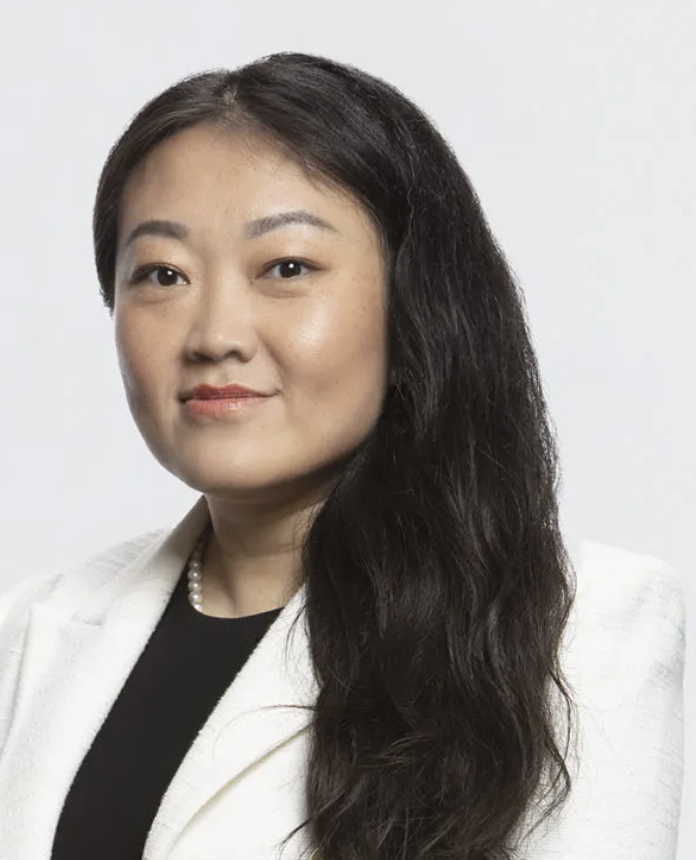
Dr. Fei Tian: Historically, investors often focused on identifying undervalued Chinese molecules and creating additional value by developing them within Western biotech structures and capital markets. Much of the opportunity came from valuation differences between regions. Today, however, that model has fundamentally evolved. Value is no longer created primarily by acquiring inexpensive assets. Instead, it comes from identifying the strongest biology at an early stage and building a globally competitive development strategy around it.
In my view, value creation depends on four elements working together. First, selecting genuinely differentiated biology. Second, designing a global clinical development programme from the outset rather than focusing on a single geography. Third, aligning the regulatory strategy early with the expectations of agencies such as the FDA, EMA and NMPA. And finally, assembling an experienced international management team capable of executing that strategy and building a company that attracts both pharmaceutical partners and global investors. In other words, arbitrage today is no longer about exploiting valuation differences. It is about integrating science, clinical development, regulation and execution into a globally competitive biotech company.
What does a global development model look like in practice?
A global development model usually begins with identifying or licensing a promising Chinese-origin asset. From that point onwards, however, the programme is no longer developed with a single market in mind. Clinical development, regulatory planning and commercial strategy are designed from the outset to support approvals and partnerships across China, the United States and Europe. That makes development considerably more complex than a traditional Phase I or Phase II programme focused on one geography. Companies need to consider early how clinical trial design, patient populations, biomarkers and regulatory strategy will ultimately support global development.
Only the strongest companies build globally from day one. Many others still internationalise much later in the process. Although this approach often requires greater planning and higher upfront investment, it usually improves capital efficiency across the full development cycle. By designing studies with multiple regulatory authorities and future commercial partners in mind, companies can reduce later development risk, avoid unnecessary duplication of studies and generate data packages that support several markets simultaneously.
Operational speed alone does not create value. Speed becomes an advantage only when it is combined with robust science, globally relevant clinical data and a regulatory strategy that enables international acceptance.
From an investor’s perspective, what distinguishes a globally competitive asset from a promising local programme?
The most valuable evidence is evidence that is clinically meaningful, reproducible and relevant for global regulators. Strong early efficacy signals, a clear biomarker rationale, appropriate comparator data and patient populations that are representative of future global development all contribute to reducing development risk. Investigator-initiated studies or China-only datasets can provide valuable early signals. However, they usually need to be complemented by global-grade clinical trials before they can support worldwide regulatory and commercial strategies.
China is already generating internationally competitive clinical data in selected areas, particularly in oncology, antibody-drug conjugates, bispecific antibodies and biomarker-defined patient populations. What matters, however, is not where the data are generated. What matters is the quality of the study design, the robustness of the data and their relevance for global regulatory decision-making.
The gap to the United States and Europe is narrowing. Nevertheless, multiregional clinical trials remain the reference standard for many global approvals. Ultimately, good data from China alone are not enough. The decisive question is whether those data are globally usable.
Different investor groups are becoming increasingly active in China. How do their roles differ?
Different groups of investors contribute at different stages of the value creation process. Crossover and arbitrage investors identify promising Chinese assets and build globally oriented US or European companies around them. Corporate venture capital investors and pharmaceutical companies increasingly invest much earlier than before – not only to generate financial returns, but to gain early access to innovative platforms and future pipeline opportunities.
Asian investors such as Temasek and HongShan often provide the bridge between Chinese science and international capital markets. Beyond financing, they contribute governance experience, international networks and help companies prepare for FDA and EMA pathways from an early stage. Rather than replacing one another, these investor groups complement each other along the development pathway. At the same time, competition for the strongest assets has become increasingly global.
Is China today primarily a competitor, a partner or a platform?
I think it has become all three. In areas such as antibody-drug conjugates, bispecific antibodies and immuno-oncology combinations, China is increasingly a direct competitor. These are therapeutic fields where success depends not only on novel biological targets, but also on platform technologies, molecular engineering, rapid iteration and increasingly sophisticated biomarker strategies. Combined with efficient clinical execution and strong oncology trial infrastructure, this has enabled Chinese companies to become highly competitive.
At the same time, China has become an attractive development partner and, in many cases, an important platform for global clinical development. I therefore no longer think it is helpful to frame this discussion as „East versus West“. The more relevant question is how science, capital and clinical development can be connected across regions to create globally competitive companies and therapies.
Europe, meanwhile, retains significant strengths. It remains exceptionally strong in fundamental science, translational research and clinical expertise. The challenge is no longer scientific quality. The challenge is translating that science into globally competitive companies that are designed for international development, financing and commercialisation from the outset.
Dear Ms Tian, thank you very much for the interview.
The interview was conducted by Urs Moesenfechtel.
Autor/Autorin
Urs Moesenfechtel, M.A., ist Redaktionsleiter der Plattform Life Sciences und gehört zum Redaktionsteam der Kapitalmarkt-Plattform GoingPublic (GoingPublic, HV Magazin, www.goingpublic.de). Urs beschäftigt sich seit vielen Jahren mit den Themenfeldern Biotechnologie und Bioökonomie und war u.a. bereits als Wissenschaftsredakteur für mehrere Forschungseinrichtungen tätig.