



For many years, Western biotech companies viewed China primarily as a manufacturing base and, increasingly, as an attractive commercial market. Today, that perspective is no longer sufficient. China has become a source of globally competitive innovation, attracting international investors, licensing partners and pharmaceutical companies alike. According to Dr. Fei Tian, Principal in the Life Science investment team at MIG Capital, this transformation is not the result of a few headline-grabbing transactions. Rather, it reflects two decades of ecosystem building – and illustrates a much broader shift: biotechnology has become a truly global industry. This is part three of a three-part interview. By Plattform Life Sciences
Part III: What Europe Must Learn (You can access the first part of the interview here and the second part here.)
Why Europe’s challenge is no longer science – but building globally competitive biotech companies.
Plattform Life Sciences: If biotechnology has become a truly global industry, what are the biggest mistakes European biotech companies and investors still make when looking at China?
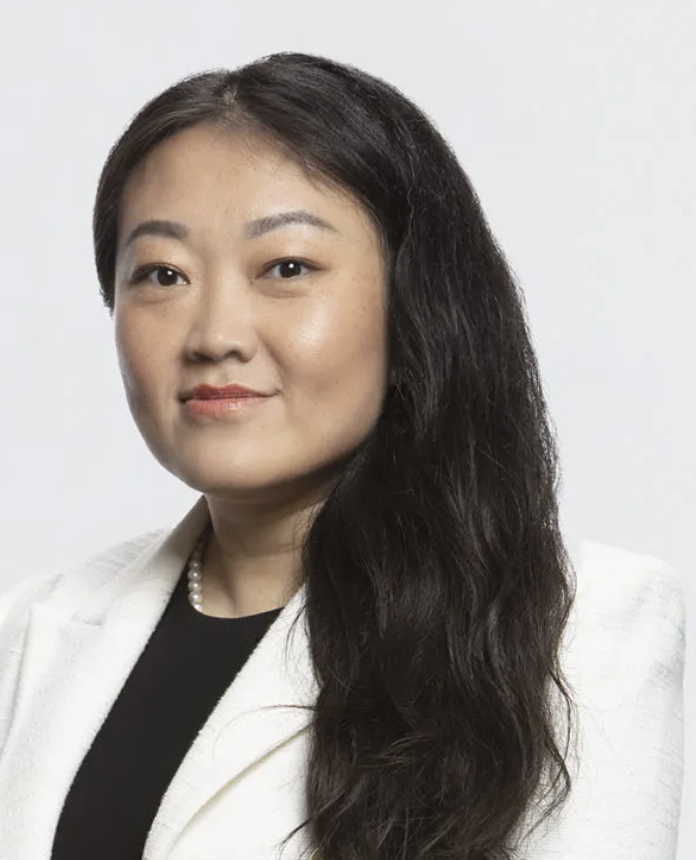
Dr. Fei Tian: The first mistake is to continue seeing China primarily as a low-cost manufacturing base or simply as a future commercial market. European companies still tend to underestimate both the scientific quality of Chinese platforms and the sophistication of Chinese clinical development. At the same time, they should not overestimate speed itself. Speed only creates value when it is supported by high-quality science, robust clinical execution and data that meet global regulatory standards. Partner selection should therefore never be driven by economics alone, but also by scientific capability, governance and long-term strategic alignment.
For European biotech companies, this also means thinking globally much earlier. China should no longer be considered only as a future commercial market. Depending on the programme, it can also become a partner for clinical development, asset sourcing and capital strategy. The strongest management teams build optionality across Europe, the United States and Asia from the very beginning instead of committing themselves too early to a purely regional development strategy.
Many European companies see China primarily as an opportunity. But does increasing collaboration also create new strategic dependencies?
Some degree of dependence already exists today, particularly in areas such as CRO and CDMO services. For smaller biotech companies, it is simply unrealistic to develop everything in-house. The key question is therefore not whether companies should collaborate internationally, but how they manage those collaborations. Diversification is far more important than dependence on any single geography. For investors, scientific opportunity therefore always needs to be considered alongside geopolitical and operational risk.
The same principle applies to clinical development. Faster clinical execution in China does not automatically translate into faster global approvals. Regulators such as the FDA and EMA may still require additional studies if Chinese clinical data are not considered sufficiently representative for broader patient populations or global regulatory decision-making. Ultimately, what matters is not where clinical data originate, but whether they are robust, globally relevant and acceptable to international regulators.
Western investors were once sceptical about intellectual property protection and innovation quality in China. Has that perception changed?
Yes, significantly, although IP due diligence remains just as important as in any international investment. Intellectual property due diligence remains just as important as anywhere else, but leading Chinese biotech companies increasingly operate according to international standards. Today, scientific differentiation has become a much more important factor than country of origin. That change is also reflected in how investors evaluate companies. Five or ten years ago, Chinese-origin assets were often judged first by where they came from. Today, the strongest programmes are increasingly assessed on the quality of their science, clinical data and commercial potential.
Historically, I would also agree that much of China’s biotech sector was characterised by fast-follower or best-in-class approaches. Today, however, we increasingly see genuine innovation alongside differentiated technology platforms. In several therapeutic areas, Chinese companies are no longer simply following global trends – they are beginning to shape them. As confidence has grown, competition has intensified as well. In areas such as ADCs and bispecific antibodies, competition for the strongest assets has become increasingly international and now resembles what we have traditionally seen in Boston or the San Francisco Bay Area.
Europe continues to produce outstanding science. Why are comparatively few companies built with a truly global ambition from the outset?
Europe’s problem is not science. Europe continues to produce world-class basic research, outstanding translational science and internationally recognised clinical expertise. The challenge is converting that scientific excellence into globally competitive companies. That requires three things: access to growth capital, experienced entrepreneurs and management teams that think internationally from the very beginning. If I could give a European biotech founder just one piece of advice, it would be this: Build your company globally from day one – not after your first clinical success.
If you could make three recommendations to European policymakers, what would they be?
First, expand access to growth capital. European science is already outstanding, but too many companies still struggle to finance international growth from Europe. Second, simplify cross-border clinical development. Europe remains fragmented, and unnecessary regulatory complexity continues to slow international development. Third, strengthen entrepreneurship and technology transfer. Europe excels at generating scientific discoveries. The next challenge is translating that excellence into globally competitive biotech companies.
Looking back over the past decade, what is the single most important lesson you have learned as an investor?
For me, the biggest lesson is that biotechnology innovation has become truly global. Great science can emerge anywhere. As investors, we need to remain intellectually curious and internationally connected because the best ideas and the strongest assets will not necessarily come from where we expect them. China illustrates this particularly well. Today, some Chinese-origin assets are already changing the standard of care in oncology. Innovation is no longer simply following established treatment paradigms – it is increasingly shaping them. Looking ahead, I believe the next wave of innovation may not be driven by clinical execution alone. China’s combination of artificial intelligence, large-scale data and rapid experimentation has the potential to fundamentally reshape how new medicines are discovered and developed.
Has China changed more over the past decade – or has biotechnology itself fundamentally changed?
I think both have happened. China has advanced remarkably quickly. But biotechnology itself has also become a much more global industry. Success today depends less on where innovation originates and much more on how effectively science, capital, clinical development and global partnerships are brought together. That is probably the most important structural change we have witnessed over the past decade.
Today, many Western pharmaceutical companies actively search China for promising assets. Can this model continue indefinitely – or will Chinese companies increasingly retain more of the value creation themselves?
I do not think the current model will remain unchanged. Chinese companies are becoming increasingly capable of conducting global clinical development, raising international capital and commercialising products themselves. As a result, I expect more companies to retain a larger share of the value chain instead of licensing promising assets at an early stage. One characteristic of the Chinese biotech ecosystem has always been its willingness to adapt quickly to changing market conditions. I therefore expect China’s role within the global biotech industry to continue evolving rather than following the development path that Europe or the United States have taken.
Dear Ms Tian, thank you very much for the interview.
The interview was conducted by Urs Moesenfechtel.
Autor/Autorin
Urs Moesenfechtel, M.A., ist Redaktionsleiter der Plattform Life Sciences und gehört zum Redaktionsteam der Kapitalmarkt-Plattform GoingPublic (GoingPublic, HV Magazin, www.goingpublic.de). Urs beschäftigt sich seit vielen Jahren mit den Themenfeldern Biotechnologie und Bioökonomie und war u.a. bereits als Wissenschaftsredakteur für mehrere Forschungseinrichtungen tätig.