



For many years, Western biotech companies viewed China primarily as a manufacturing base and, increasingly, as an attractive commercial market. Today, that perspective is no longer sufficient. China has become a source of globally competitive innovation, attracting international investors, licensing partners and pharmaceutical companies alike. According to Dr. Fei Tian, Principal in the Life Science investment team at MIG Capital, this transformation is not the result of a few headline-grabbing transactions. Rather, it reflects two decades of ecosystem building – and illustrates a much broader shift: biotechnology has become a truly global industry. This is the first part of a three-part interview. Parts 2 and 3 will be published in the coming days. By Plattform Life Sciences
Part I: From Manufacturing Base to Global Innovation Hub
Plattform Life Sciences: European investors have looked at China for many years as a manufacturing base and, later, as an important commercial market. What do many observers in Europe still underestimate today?
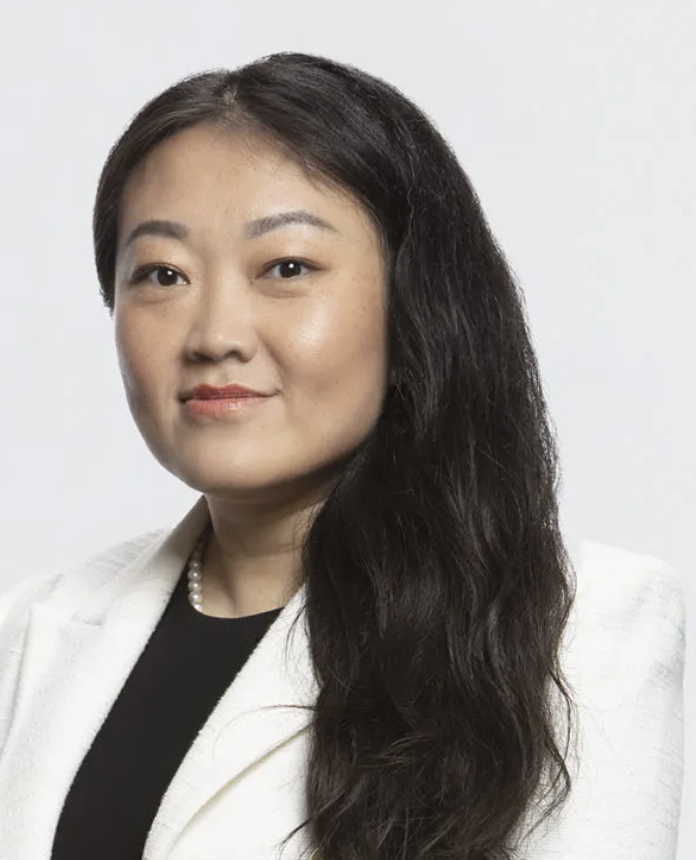
Dr. Fei Tian: I think many still underestimate the scientific quality that has emerged in China over the past decade, as well as the sophistication of its clinical infrastructure, development capabilities and management teams. China is no longer simply a market or a manufacturing base. It has become a source of globally relevant assets, technology platforms, clinical data and new development models. There was no single turning point, but between roughly 2015 and 2018 the ecosystem moved beyond predominantly „me-too“ programmes towards increasingly differentiated innovation. That transformation became particularly visible after the COVID-19 pandemic, when many companies began reporting strong clinical results. Since around 2023, a series of major licensing transactions has made this evolution impossible to ignore.
The key shift is that China is no longer viewed primarily as a destination for market access. It is increasingly recognised as a source of globally competitive pipeline assets, a strategic development partner and an integral part of the global biotech investment ecosystem. From an investor’s perspective, the question today is no longer whether China should be part of the search process. The more important question is where the strongest science in a particular therapeutic area is actually emerging.
Many of the recent billion-dollar licensing deals have attracted enormous attention. Are these transactions the cause of China’s biotech rise – or simply its consequence?
They are much more the result than the cause. The recent wave of licensing transactions reflects roughly two decades of ecosystem development rather than a sudden change in market dynamics. During this period, China systematically strengthened its scientific base, invested heavily in research infrastructure, built world-class CRO and CDMO capabilities, developed a more mature regulatory environment and fostered a much stronger venture capital ecosystem. At the same time, internationally trained scientists and entrepreneurs returned to China, creating an innovation landscape capable of producing globally competitive biotech companies.
Several additional developments have accelerated this trend over the past few years. More Chinese assets are now reaching Phase II, where clinical proof of concept becomes visible and international pharmaceutical companies can assess commercial potential with much greater confidence. At the same time, many large pharmaceutical companies are approaching a significant patent cliff and are actively searching for externally developed pipeline assets. Capital scarcity across the biotech sector has further increased the strategic importance of licensing as a financing and partnering model.
Another important factor is the type of innovation now emerging from China. In areas such as antibody-drug conjugates (ADCs) and bispecific antibodies, innovation increasingly builds on already validated biology. Differentiation comes through better molecular engineering, improved safety profiles, stronger efficacy or novel combination strategies. For pharmaceutical companies, these programmes often represent a more attractive risk profile than entirely new biological mechanisms, particularly in oncology.
The BioNTech–Biotheus transaction illustrates this evolution particularly well. It was both the result of a long-term transformation and an important signal to the global industry. The deal itself did not create the trend, but it demonstrated that Chinese-origin assets had become mainstream strategic acquisitions rather than opportunistic licensing opportunities. The subsequent Summit transaction reinforced that perception.
Ultimately, these transactions were never just deals around individual molecules. They reflected growing confidence in the quality of Chinese technology platforms, the maturity of the underlying science and the ability of Chinese biotech companies to execute development programmes at an internationally competitive level.
Dear Ms Tian, thank you very much for the interview.
The interview was conducted by Urs Moesenfechtel.
Autor/Autorin

Urs Moesenfechtel, M.A., ist Redaktionsleiter der Plattform Life Sciences und gehört zum Redaktionsteam der Kapitalmarkt-Plattform GoingPublic (GoingPublic, HV Magazin, www.goingpublic.de). Urs beschäftigt sich seit vielen Jahren mit den Themenfeldern Biotechnologie und Bioökonomie und war u.a. bereits als Wissenschaftsredakteur für mehrere Forschungseinrichtungen tätig.