



Bildnachweis: ChatGPT (OpenAI), ECBF.
Impact investing is evolving. Rather than looking at individual environmental outcomes in isolation, investors increasingly need to understand how technologies interact with resources, value chains, natural systems and economic resilience. For the ECBF, this means moving “from climate impact to systemic value.” In this interview, ECBF Partner Isabelle Laurencin explains why systemic thinking does not replace impact measurement but makes it more meaningful.
Plattform Life Sciences: Why is “systemic change” the logical next step in impact investing? Doesn’t it make an already complex investment process even harder to measure and verify?
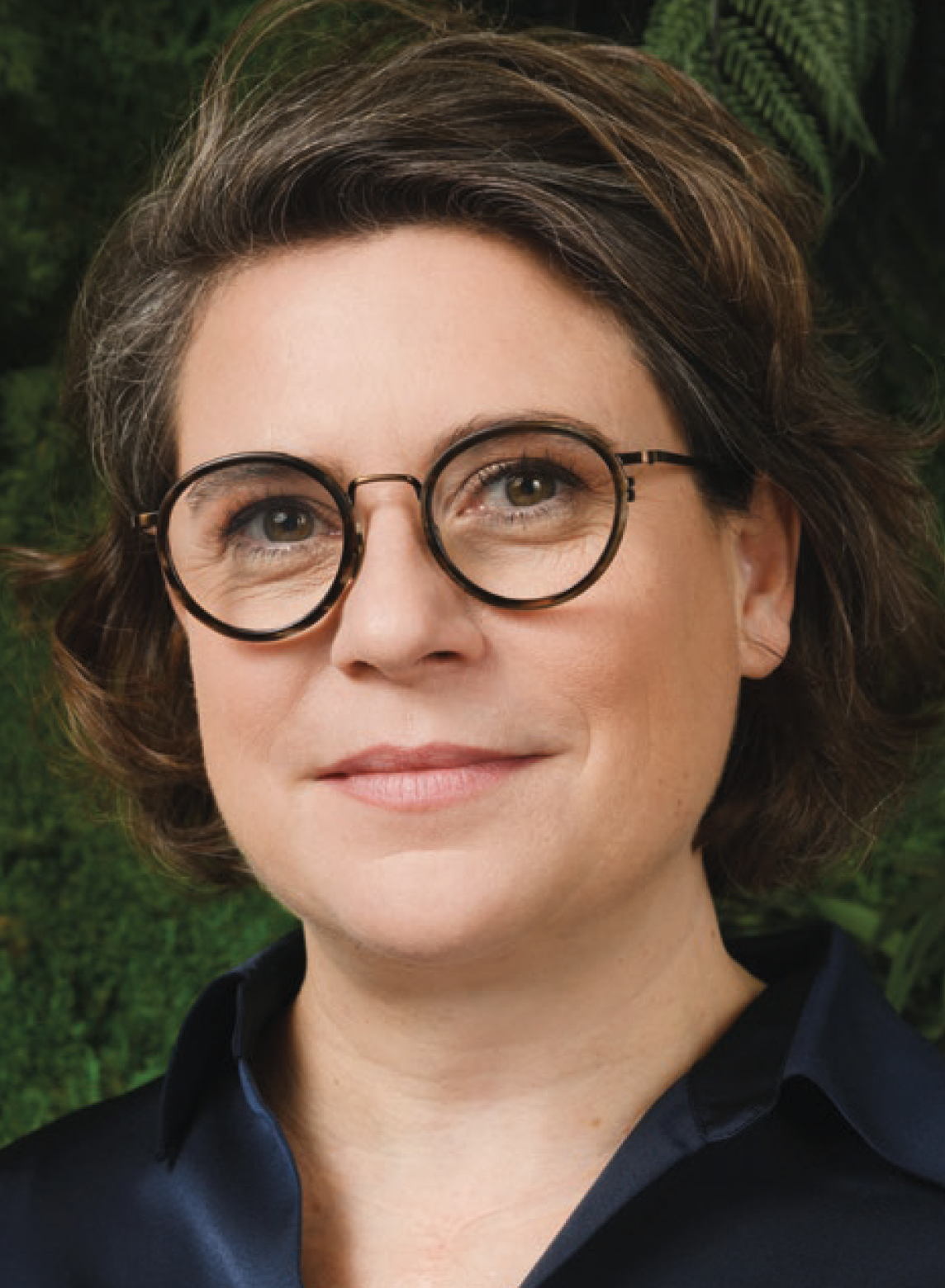
Isabelle Laurencin: I see systemic thinking more as a natural evolution of impact investing. We are looking back to five years of systematic ESG and impact monitoring across our portfolio. One of the clearest lessons from this work is that impact rarely happens in one dimension. A technology that reduces greenhouse gas emissions may also affect resource consumption, circularity, biodiversity, health or the resilience of an industrial value chain. If we only look at one metric – carbon, for example – we may miss a significant part of the picture. The answer, however, is not to create an ever-growing catalogue of KPIs. We need to identify the most material impact mechanisms of a technology, measure what can meaningfully be measured and use scientific evidence to understand the wider context. So systemic thinking does not replace measurement. It makes measurement more meaningful.
“Systemic change” sounds ambitious. Isn’t it simply a new label for traditional impact investing? How can you tell whether a company is actually changing a system rather than simply reducing emissions or using fewer resources?
We need to be careful with that terminology. We would not claim that an individual company or an individual investment, changes an entire system on its own. The question we ask is rather: What could change if this technology scales? Reducing emissions is important. But we also want to understand the mechanism behind that reduction and the role the technology plays within a wider value chain. Does it replace fossil-based inputs? Does it make circular material flows possible where they were previously uneconomic? Does it remove a structural bottleneck that prevents an industry from transitioning? This is where the distinction between scaling and systemic relevance becomes important. Scale tells us how widely a technology is adopted. Systemic thinking asks what that adoption changes in the wider system. Our role as an investor is therefore not to declare that a company is “system-changing”, but to understand whether its technology addresses a critical point within a system and has the potential to contribute to broader transformation as it scales.Scale tells us
how widely a technology is adopted.
Systemic thinking asks
what that adoption changes
in the wider system.
What does ECBF actually do differently from other impact investors? Is there a methodological or investment-strategic difference at all?
What differentiates ECBF is primarily the combination of our specialisation in the circular bioeconomy, our impact capabilities and the experience we have accumulated through systematic monitoring of our portfolio. Because we are a specialist investor, we can look at impact in the context of the technology, the industry and the value chain in which a company operates. For us, impact is therefore not a separate layer that we add to an investment case afterwards. We want to understand the relationship between a technology’s environmental impact, its industrial relevance and its commercial potential. That leads us to a question that I find particularly interesting: Not only “How much impact does this company generate?”, but also “Why could this impact make the company more relevant and competitive?”
Environmental constraints are increasingly
becoming economic constraints.
Why are you convinced that this broader perspective will not only generate more impact, but also lead to better investments and attractive financial returns?
I would phrase that slightly differently, because impact does not automatically lead to financial returns. What we do see, however, is that environmental constraints are increasingly becoming economic constraints. Energy, water, land, biological resources and materials have direct implications for cost structures and supply chains. At the same time, regulation and customer requirements are changing the economics of many industries. A company that enables its customers to produce more with fewer resources, reduce dependency on fossil-based inputs, create circular material flows or make production systems more resilient is therefore not only addressing an environmental problem. It may also be solving a very concrete economic problem. That is where impact and investment logic can reinforce one another. Instead of always asking how we balance impact and financial performance, we can increasingly ask: Where does solving an environmental constraint itself create competitive advantage? That does not eliminate venture risk, of course. But it can help us identify technologies with both environmental relevance and strong long-term industrial relevance.
How is this systemic perspective reflected in ECBF’s investment strategy today?
The biggest change is probably in the questions we ask. Our thinking has evolved from looking primarily at individual outcomes towards understanding mechanisms, interdependencies and the role a technology can play within a wider system. We are particularly interested in technologies that operate at critical points in value chains – places where innovation can address an environmental constraint while simultaneously creating tangible industrial and economic value. The circular bioeconomy is particularly interesting from this perspective because many of the challenges are inherently interconnected: how we use biological resources, how we produce food and materials, how we manage waste streams and how we reduce dependence on fossil resources. This is not a departure from ECBF’s core investment philosophy. It is an evolution based on what we have learned from investing in and working with companies across the European circular bioeconomy.
We should resist the temptation
to reduce impact to a single number.
What reactions have you received to this evolution of ECBF’s impact approach?
What we see in many conversations is a growing interest in moving beyond headline impact metrics. I think there is also a growing recognition that impact measurement should not exist primarily to produce a report at the end of the year. The real value comes when impact information feeds back into how we understand companies, technologies, risks and opportunities. That is ultimately what we want to achieve with our approach.
Five years of impact monitoring have now gone into Impact Insights 2025. What is the most important conclusion you personally take away from that work?
Perhaps the most important learning is that we should resist the temptation to reduce impact to a single number. Metrics are essential. Without measurement and evidence, impact investing risks becoming a collection of good intentions. But numbers only become useful when we understand what sits behind them. Five years of working with our portfolio have reinforced our conviction that environmental impact, industrial transformation and economic value are often much more closely connected than they first appear. For investors, the opportunity is to understand those connections earlier and more systematically. That is what we mean when we talk about moving from climate impact to systemic value.
Isabelle Laurencin, thank you very much for the interview.
The Interview was conducted by Urs Moesenfechtel.
ABOUT THE INTERVIEWEE:
Isabelle Laurencin is a seasoned investment professional with over 20 years of experience in impact and climate investments. She is currently a Partner at ECBF (European Circular Bioeconomy Fund), where she focuses on investing in transformative companies driving the bioeconomy transition. Before joining ECBF, Isabelle served as the Global Lead for Climate Tech VC at IFC (World Bank Group), shaping the organization‘s venture capital strategy in climate. Prior to that, she managed a EUR 70 million venture capital fund at Triodos Investment Management, specializing in the sustainable food transition in Europe.
Autor/Autorin

Urs Moesenfechtel, M.A., ist Redaktionsleiter der Plattform Life Sciences und gehört zum Redaktionsteam der Kapitalmarkt-Plattform GoingPublic (GoingPublic, HV Magazin, www.goingpublic.de). Urs beschäftigt sich seit vielen Jahren mit den Themenfeldern Biotechnologie und Bioökonomie und war u.a. bereits als Wissenschaftsredakteur für mehrere Forschungseinrichtungen tätig.